


In various plastic mold processing, how can CNC programming strategies be used to reduce the accumulation of machining errors in multi-cavity molds?
Release Time : 2026-01-21
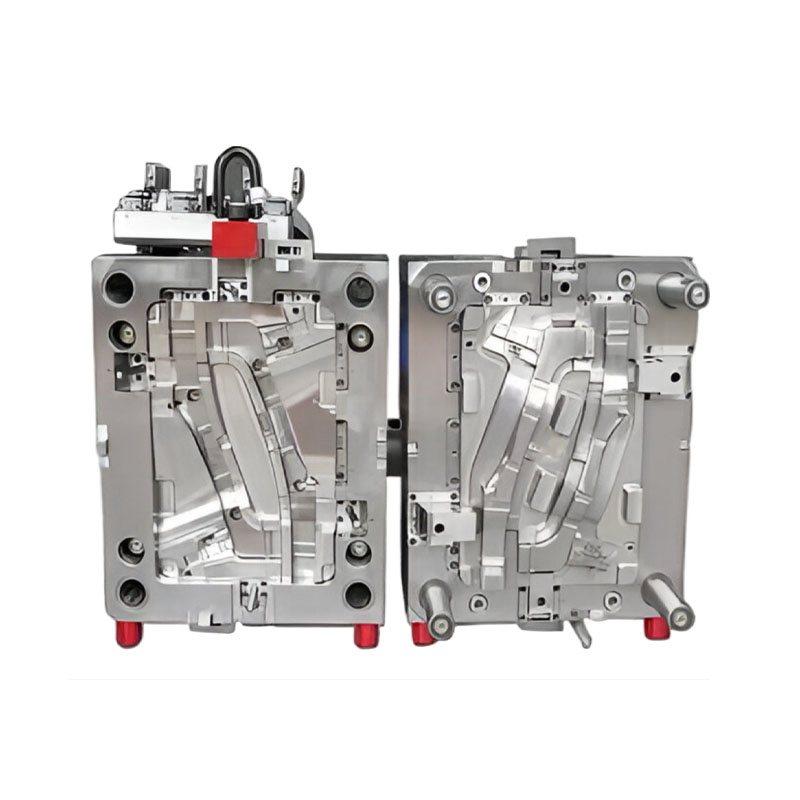
In the field of multi-cavity plastic mold processing, the manufacturing precision of multi-cavity molds directly determines the dimensional consistency and quality stability of the final product. CNC programming, as the core of mold processing, plays a decisive role in reducing the accumulation of machining errors due to its rational strategy. By optimizing key aspects of CNC programming, such as toolpath planning, machining parameter setting, coordinate system management, and program verification, the error accumulation caused by factors such as repeated clamping, tool wear, and machine tool vibration in multi-cavity molds can be significantly reduced, thereby improving overall machining accuracy.
Toolpath optimization is the primary strategy for reducing error accumulation. In multi-cavity mold processing, the geometric characteristics of each cavity may differ. If a uniform toolpath is used, it can easily lead to uneven cutting loads in local areas, resulting in vibration or tool deflection. By employing adaptive toolpath generation technology, the cutting direction and feed rate can be dynamically adjusted according to the surface curvature, depth, and other characteristics of the cavity, ensuring that the tool always participates in cutting with optimal posture, reducing errors caused by unreasonable toolpaths. Furthermore, introducing advanced path planning methods such as helical milling and contour milling can further reduce cutting force fluctuations and avoid machine tool deformation caused by excessive instantaneous loads, thereby reducing error propagation.
Precise setting of machining parameters is crucial for controlling error accumulation. The selection of parameters such as cutting speed, feed rate, and depth of cut in various plastic mold processing requires comprehensive consideration of material properties, tool performance, and machine tool rigidity. In multi-cavity mold processing, if the same parameters are used for each cavity, inconsistent cutting results may occur due to uneven material hardness or differences in allowance. By introducing a parameter optimization model based on material removal rate, machining parameters can be dynamically adjusted according to the specific conditions of each cavity, ensuring that the cutting process of each cavity is in optimal condition. Simultaneously, constant cutting load control technology can monitor cutting forces in real time and automatically adjust parameters, avoiding error accumulation caused by local overload.
Unified management of the coordinate system is fundamental to reducing error accumulation in multi-cavity molds. Multi-cavity molds typically contain multiple cavities; if the machining coordinate systems of each cavity are not strictly aligned, it will lead to overall dimensional deviations. By adopting a global coordinate system definition method, the machining datum of all cavities is unified to the mold design datum, eliminating errors caused by coordinate system transformation. Furthermore, the introduction of an automatic workpiece zero-point setting function ensures the consistency of the coordinate system after each clamping, avoiding error accumulation due to repeated positioning. For complex multi-cavity molds, 3D laser scanning technology can be used to perform real-time detection of the machined cavities, and the detection data can be fed back to the CNC system to achieve closed-loop control of the machining process.
The introduction of program verification and simulation technology can identify potential error sources in advance. After CNC programming, virtual machining simulation technology can simulate the tool path's movement trajectory in actual machining, detecting problems such as overcutting, undercutting, or collisions. For multi-cavity molds, simulation technology can also simulate the machining sequence and time intervals of each cavity, evaluating the error accumulation effect caused by thermal deformation or machine tool vibration. Through simulation optimization, the machining sequence or parameters in the program can be adjusted in advance to avoid errors exceeding tolerances during actual machining.
Dynamic compensation for tool wear is an effective means of reducing long-term error accumulation. In batch machining of multi-cavity molds, tool wear gradually alters cutting conditions, leading to increased machining errors in subsequent cavities. Introducing a tool condition monitoring system allows for real-time tracking of tool wear and automatic adjustment of cutting parameters or triggering of tool change commands, ensuring consistent machining conditions for each cavity. Furthermore, tool life management allows for statistical analysis of machining times for different cavities, enabling the rational scheduling of tool change cycles and preventing error accumulation due to excessive tool wear.
Optimizing the machining sequence can reduce the impact of thermal deformation on multi-cavity molds. When machining multiple cavities consecutively, an improper machining sequence can cause localized temperature increases, leading to thermal expansion and deformation, which in turn affects the dimensional accuracy of subsequent cavities. By analyzing the geometric characteristics and machining time of each cavity, an optimal machining sequence can be determined, ensuring uniform heat distribution and reducing the impact of thermal deformation on overall accuracy. For high-precision multi-cavity molds, an intermittent machining strategy can be employed, pausing machining after processing a portion of the cavities and allowing the mold to cool to a stable temperature before resuming machining, thereby eliminating thermal error accumulation.
Optimization of CNC programming strategies must be implemented throughout the entire multi-cavity mold machining process. From toolpath planning, parameter setting, and coordinate system management to program verification, tool wear compensation, and machining sequence optimization, each step requires meticulous design with the goal of minimizing error accumulation. By comprehensively applying the above strategies, the machining accuracy of multi-cavity molds can be significantly improved, meeting the stringent requirements of plastic products for dimensional consistency and quality stability, and providing strong technical support for high-end multi-cavity plastic mold processing.