


How does CNC engraving empower industrial and creative manufacturing with high-precision customization of aluminum parts?
Release Time : 2025-12-24
In aerospace, automotive manufacturing, consumer electronics, medical devices, and even architectural decoration, aluminum parts, due to their low density, high strength, good thermal and electrical conductivity, and excellent machinability, have become indispensable materials in modern engineering design. Transforming ordinary aluminum into functionally precise and aesthetically pleasing end components relies heavily on CNC engraving. Through digital programming and multi-axis linkage control, engraving machines not only achieve high-precision cutting of complex geometries but also endow aluminum products with functional, aesthetic, and highly customized value.
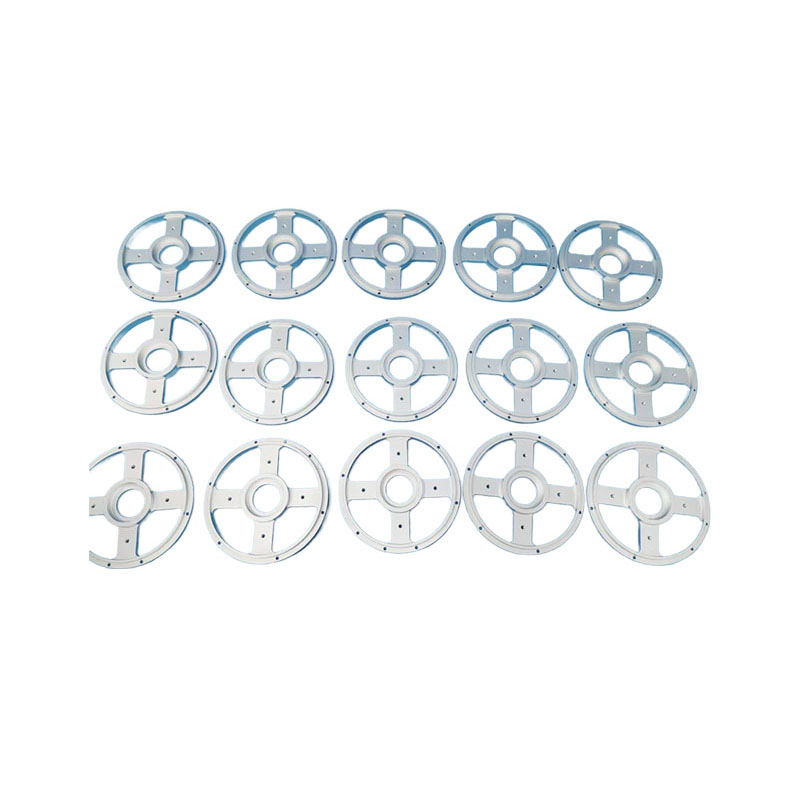
The core advantage of aluminum parts engraving lies in its micron-level machining accuracy and superior surface quality. Using high-speed spindles (up to 24,000 rpm and above) and carbide or diamond-coated tools, CNC engraving machines can perform milling, drilling, tapping, chamfering, and 3D surface engraving on commonly used aluminum alloys such as 6061, 7075, and 5052, with dimensional tolerances controlled within ±0.01mm. The machined parts have clear outlines, burr-free edges, and a surface roughness Ra value as low as 0.8μm, meeting most assembly or appearance requirements without the need for secondary polishing. This precision is particularly critical for components sensitive to form and position tolerances, such as heat sink fins, optical brackets, and drone frames.
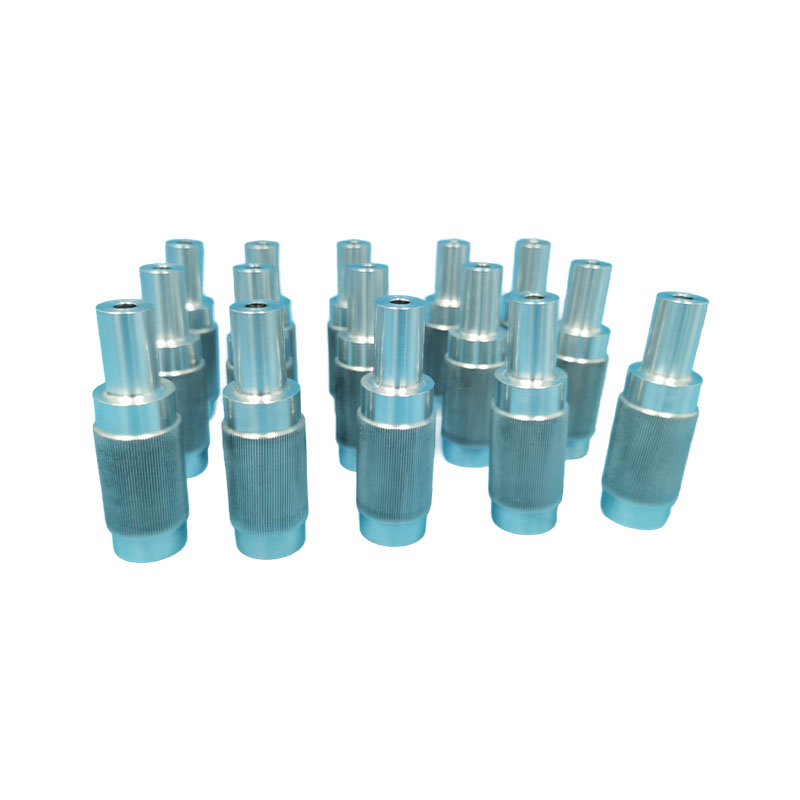
The ability to integrally form complex structures further highlights the value of engraving technology. Internal cavities, irregular grooves, thin-walled reinforcing ribs, or biomimetic topological structures that are difficult to achieve with traditional casting or stamping can all be completed in a single setup using a five-axis CNC engraving machine. This not only reduces welding or assembly steps and improves overall rigidity but also significantly reduces the cumulative errors and failure risks caused by splicing multiple parts. For example, an aluminum knob used in high-end audio equipment requires both precise internal thread fit and a delicate external brushed texture; CNC engraving can simultaneously complete the structural and decorative processing, achieving "function as aesthetics."
In terms of surface treatment compatibility, the engraved aluminum parts can seamlessly integrate with subsequent processes such as anodizing, sandblasting, brushing, and electrophoretic coating. Anodizing enhances wear and corrosion resistance and can be dyed in various colors such as black, gold, and blue; sandblasting imparts a uniform matte texture, concealing machining marks; and finely engraved logos or serial numbers appear more three-dimensional and sophisticated after oxidation. This integrated "machining + surface treatment" process allows customized aluminum parts to possess both industrial strength and consumer-grade quality.
Small-batch, multi-variety flexible production is another major advantage of CNC machining. Compared to mold-dependent processes, CNC only requires a program update to switch products, making it particularly suitable for prototyping, limited-edition customization, or rapid iteration projects. Designers upload 3D models, engineers optimize toolpaths, and samples can be delivered within 24 hours. This agile response allows startups, research institutions, and creative studios to validate concepts at low cost and accelerate product launch cycles.
Furthermore, modern aluminum parts engraving has deeply integrated intelligent and green manufacturing concepts. CAM software automatically optimizes cutting paths, reducing idle travel and tool wear; a centralized waste recycling system achieves over 99% aluminum reuse; and energy consumption monitoring modules reduce the carbon footprint per unit of processing. Some high-end equipment also integrates online measurement probes to achieve automatic compensation during processing, ensuring that the first piece is qualified.
From a drone motor mount to a building curtain wall connector, from precision laboratory fixtures to luxury phone cases, customized aluminum parts are embodying the precision and innovation of modern manufacturing in a lightweight form. CNC engraving machines are the "metal sculptors" that transform digital blueprints into physical reality. They do not rely on high-temperature casting, but rather use their cool, precise blades to sculpt a perfect unity of function and form. Because in the world of advanced manufacturing, true customization is not simple replication, but rather every cut made for a unique need—and this is precisely the irreplaceable value of aluminum parts engraving machine processing.
The core advantage of aluminum parts engraving lies in its micron-level machining accuracy and superior surface quality. Using high-speed spindles (up to 24,000 rpm and above) and carbide or diamond-coated tools, CNC engraving machines can perform milling, drilling, tapping, chamfering, and 3D surface engraving on commonly used aluminum alloys such as 6061, 7075, and 5052, with dimensional tolerances controlled within ±0.01mm. The machined parts have clear outlines, burr-free edges, and a surface roughness Ra value as low as 0.8μm, meeting most assembly or appearance requirements without the need for secondary polishing. This precision is particularly critical for components sensitive to form and position tolerances, such as heat sink fins, optical brackets, and drone frames.
The ability to integrally form complex structures further highlights the value of engraving technology. Internal cavities, irregular grooves, thin-walled reinforcing ribs, or biomimetic topological structures that are difficult to achieve with traditional casting or stamping can all be completed in a single setup using a five-axis CNC engraving machine. This not only reduces welding or assembly steps and improves overall rigidity but also significantly reduces the cumulative errors and failure risks caused by splicing multiple parts. For example, an aluminum knob used in high-end audio equipment requires both precise internal thread fit and a delicate external brushed texture; CNC engraving can simultaneously complete the structural and decorative processing, achieving "function as aesthetics."
In terms of surface treatment compatibility, the engraved aluminum parts can seamlessly integrate with subsequent processes such as anodizing, sandblasting, brushing, and electrophoretic coating. Anodizing enhances wear and corrosion resistance and can be dyed in various colors such as black, gold, and blue; sandblasting imparts a uniform matte texture, concealing machining marks; and finely engraved logos or serial numbers appear more three-dimensional and sophisticated after oxidation. This integrated "machining + surface treatment" process allows customized aluminum parts to possess both industrial strength and consumer-grade quality.
Small-batch, multi-variety flexible production is another major advantage of CNC machining. Compared to mold-dependent processes, CNC only requires a program update to switch products, making it particularly suitable for prototyping, limited-edition customization, or rapid iteration projects. Designers upload 3D models, engineers optimize toolpaths, and samples can be delivered within 24 hours. This agile response allows startups, research institutions, and creative studios to validate concepts at low cost and accelerate product launch cycles.
Furthermore, modern aluminum parts engraving has deeply integrated intelligent and green manufacturing concepts. CAM software automatically optimizes cutting paths, reducing idle travel and tool wear; a centralized waste recycling system achieves over 99% aluminum reuse; and energy consumption monitoring modules reduce the carbon footprint per unit of processing. Some high-end equipment also integrates online measurement probes to achieve automatic compensation during processing, ensuring that the first piece is qualified.
From a drone motor mount to a building curtain wall connector, from precision laboratory fixtures to luxury phone cases, customized aluminum parts are embodying the precision and innovation of modern manufacturing in a lightweight form. CNC engraving machines are the "metal sculptors" that transform digital blueprints into physical reality. They do not rely on high-temperature casting, but rather use their cool, precise blades to sculpt a perfect unity of function and form. Because in the world of advanced manufacturing, true customization is not simple replication, but rather every cut made for a unique need—and this is precisely the irreplaceable value of aluminum parts engraving machine processing.