


How can stainless steel CNC turning balance strength, precision, and efficiency?
Release Time : 2025-12-25
In modern manufacturing, stainless steel is widely used in medical devices, aerospace, food machinery, automotive parts, and precision instruments due to its excellent corrosion resistance, high strength, good thermal stability, and aesthetically pleasing surface. However, stainless steel's high hardness, high toughness, and poor thermal conductivity lead to problems such as work hardening, rapid tool wear, and high cutting temperatures during processing, posing a serious challenge to traditional machining methods. CNC turning technology, with its high automation, high repeatability, and flexible programming capabilities, has become a core method for precision machining of stainless steel.
Stainless steel CNC turning is the process of using a computer numerical control (CNC) lathe to drive a cutting tool through program instructions to perform various cutting operations on a rotating stainless steel workpiece, including external diameter cutting, internal hole cutting, end face cutting, thread cutting, and tapered surface cutting. Compared to ordinary lathes, CNC systems can achieve micron-level feed control, constant linear velocity cutting, and machining of complex contour trajectories, ensuring that part dimensional tolerances, geometric tolerances, and surface roughness meet stringent industrial standards. Especially in mass production, CNC turning ensures the consistency of each product and significantly reduces human error. For machining stainless steel, CNC turning requires specially optimized process parameters and tooling systems. Commonly used tool materials include coated cemented carbide (such as TiAlN coating), cermet, or cubic boron nitride (CBN) to resist adhesive and diffusion wear at high temperatures. Cutting parameters typically employ lower cutting speeds (Vc = 50–120 m/min), moderate feed rates (f = 0.1–0.3 mm/rev), and sufficient depth of cut to avoid repeated friction on the material surface leading to hardened layer accumulation. Simultaneously, the full utilization of high-pressure coolant or micro-volume lubrication (MQL) technology effectively reduces cutting zone temperature, extends tool life, and improves chip removal.
Machine tool rigidity is also crucial for successful machining. Stainless steel cutting forces are high; insufficient machine tool rigidity can easily cause vibration, affecting surface quality and even damaging tools. Therefore, high-precision stainless steel CNC turning generally uses high-rigidity slant bed or flat bed CNC lathes, equipped with high-torque spindles and precision ball screws to ensure stable operation under heavy cutting loads. Some high-end equipment also integrates online measurement, automatic tool setting, and tool wear compensation functions, achieving "one-time clamping, complete machining" and reducing secondary positioning errors.
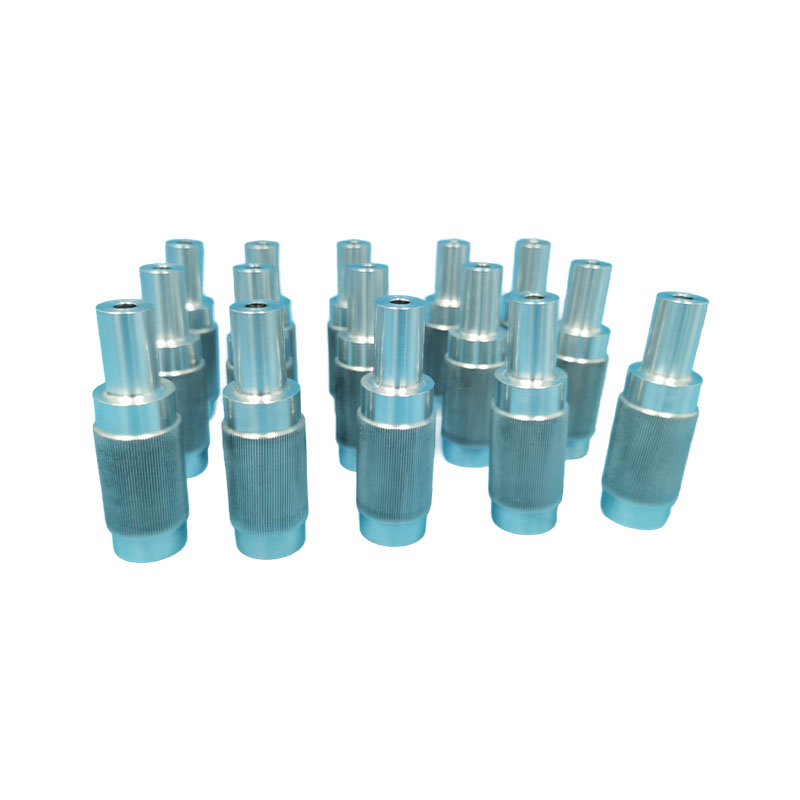
In practical applications, stainless steel CNC turning can efficiently manufacture everything from simple shaft parts to complex valve bodies, connectors, pump housings, and other irregularly shaped parts. For example, in the medical industry, surgical instrument handles require mirror finish and strict aseptic requirements, which can be met by CNC turning combined with subsequent polishing; in food machinery, sanitary 316L stainless steel pipe connectors achieve seamless sealing surfaces through precision turning, eliminating dead zones for bacterial growth; in the new energy vehicle sector, the high concentricity and airtightness of battery casing end caps also rely on the precise control of CNC turning.
Furthermore, with the advancement of intelligent manufacturing, stainless steel CNC turning is rapidly integrating into digital production systems. Through CAM software automatically generating G-code, MES systems monitoring machining status in real time, and IoT platforms collecting tool life data, enterprises can achieve closed-loop management of the entire process from design to delivery. This "hardware and software integration" model not only improves production efficiency but also enables flexible manufacturing of small batches and multiple varieties. Despite the high difficulty of machining stainless steel, mature CNC turning technology can systematically address various challenges. It is not merely a means of material removal, but a crucial step in endowing stainless steel parts with functionality, reliability, and aesthetic value. In the future, with the introduction of new technologies such as ultrasonic-assisted turning and cryogenic cooling cutting, stainless steel CNC turning will continue to evolve towards higher efficiency, better surface finish, and lower energy consumption, providing solid support for high-end manufacturing.
Stainless steel CNC turning is the process of using a computer numerical control (CNC) lathe to drive a cutting tool through program instructions to perform various cutting operations on a rotating stainless steel workpiece, including external diameter cutting, internal hole cutting, end face cutting, thread cutting, and tapered surface cutting. Compared to ordinary lathes, CNC systems can achieve micron-level feed control, constant linear velocity cutting, and machining of complex contour trajectories, ensuring that part dimensional tolerances, geometric tolerances, and surface roughness meet stringent industrial standards. Especially in mass production, CNC turning ensures the consistency of each product and significantly reduces human error. For machining stainless steel, CNC turning requires specially optimized process parameters and tooling systems. Commonly used tool materials include coated cemented carbide (such as TiAlN coating), cermet, or cubic boron nitride (CBN) to resist adhesive and diffusion wear at high temperatures. Cutting parameters typically employ lower cutting speeds (Vc = 50–120 m/min), moderate feed rates (f = 0.1–0.3 mm/rev), and sufficient depth of cut to avoid repeated friction on the material surface leading to hardened layer accumulation. Simultaneously, the full utilization of high-pressure coolant or micro-volume lubrication (MQL) technology effectively reduces cutting zone temperature, extends tool life, and improves chip removal.
Machine tool rigidity is also crucial for successful machining. Stainless steel cutting forces are high; insufficient machine tool rigidity can easily cause vibration, affecting surface quality and even damaging tools. Therefore, high-precision stainless steel CNC turning generally uses high-rigidity slant bed or flat bed CNC lathes, equipped with high-torque spindles and precision ball screws to ensure stable operation under heavy cutting loads. Some high-end equipment also integrates online measurement, automatic tool setting, and tool wear compensation functions, achieving "one-time clamping, complete machining" and reducing secondary positioning errors.
In practical applications, stainless steel CNC turning can efficiently manufacture everything from simple shaft parts to complex valve bodies, connectors, pump housings, and other irregularly shaped parts. For example, in the medical industry, surgical instrument handles require mirror finish and strict aseptic requirements, which can be met by CNC turning combined with subsequent polishing; in food machinery, sanitary 316L stainless steel pipe connectors achieve seamless sealing surfaces through precision turning, eliminating dead zones for bacterial growth; in the new energy vehicle sector, the high concentricity and airtightness of battery casing end caps also rely on the precise control of CNC turning.
Furthermore, with the advancement of intelligent manufacturing, stainless steel CNC turning is rapidly integrating into digital production systems. Through CAM software automatically generating G-code, MES systems monitoring machining status in real time, and IoT platforms collecting tool life data, enterprises can achieve closed-loop management of the entire process from design to delivery. This "hardware and software integration" model not only improves production efficiency but also enables flexible manufacturing of small batches and multiple varieties. Despite the high difficulty of machining stainless steel, mature CNC turning technology can systematically address various challenges. It is not merely a means of material removal, but a crucial step in endowing stainless steel parts with functionality, reliability, and aesthetic value. In the future, with the introduction of new technologies such as ultrasonic-assisted turning and cryogenic cooling cutting, stainless steel CNC turning will continue to evolve towards higher efficiency, better surface finish, and lower energy consumption, providing solid support for high-end manufacturing.