


How can plastic mold processing extend mold lifespan while ensuring consistent plastic product quality?
Release Time : 2025-11-26
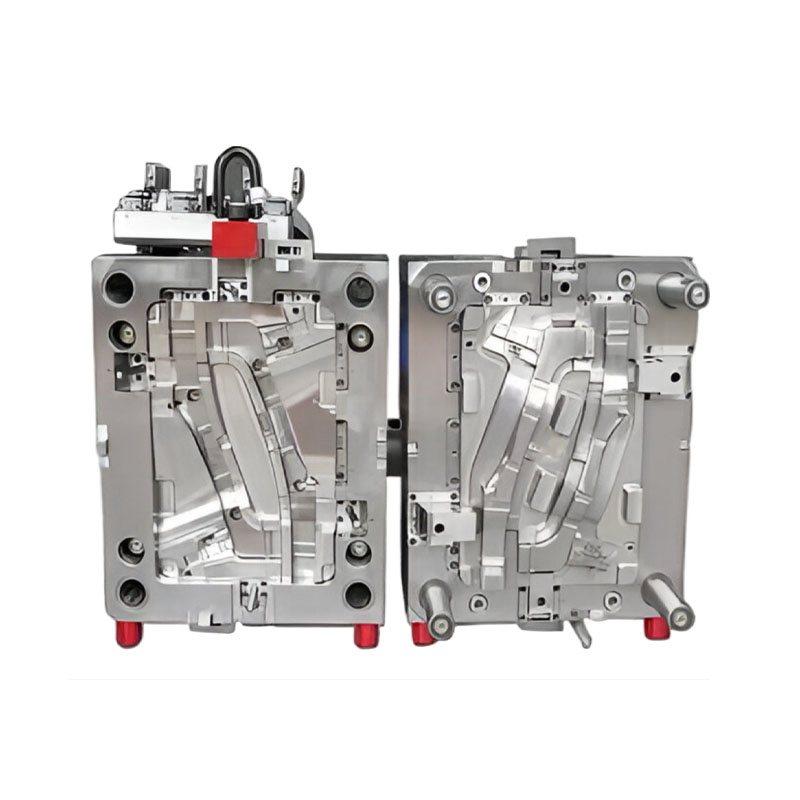
In modern injection molding production, plastic molds are not only the core tool for product forming but also a key factor determining production efficiency, cost control, and product quality stability. Facing increasingly stringent market demands—molds must be durable, and finished products must be virtually identical—advanced plastic mold processing technology achieves dual guarantees of lifespan and consistency through multi-dimensional collaboration involving material optimization, precision manufacturing, surface treatment, and intelligent process control.
1. High-Precision Machining: Laying the Foundation for Consistency
The consistency of plastic product quality stems primarily from the geometric precision of the mold cavity and core. Modern plastic mold processing commonly employs high-rigidity vertical or horizontal machining centers, coupled with five-axis linkage technology, enabling precise cutting of complex curved surfaces, deep cavities, narrow grooves, and microstructures in a single operation, controlling dimensional tolerances within ±0.005mm. Simultaneously, thermal deformation compensation systems and a constant-temperature workshop environment effectively eliminate the effects of temperature drift during processing. This micron-level manufacturing precision ensures a highly consistent melt flow path and holding pressure distribution during each injection molding cycle, fundamentally avoiding defects such as flash, shrinkage, and dimensional deviations caused by mold errors. This lays a solid foundation for stable mass production.
2. High-Quality Materials and Scientific Heat Treatment: The Foundation for Extended Lifespan
The lifespan of a mold largely depends on the choice of materials and the heat treatment process. High-end plastic molds often use pre-hardened steel, corrosion-resistant steel, or high-wear-resistant steel. These materials already possess good hardness and uniform microstructure before leaving the factory, reducing the risk of deformation during subsequent processing. More importantly, vacuum quenching, cryogenic treatment, and tempering stabilization processes can significantly refine the grain structure, eliminate residual stress, and improve the mold's fatigue resistance and corrosion resistance. For example, cryogenic treatment before mirror polishing of transparent molds not only extends the lifespan of the polished surface but also reduces surface haze caused by the propagation of microcracks during use.
3. Advanced Surface Treatment: Balancing Wear Resistance and Demolding Performance
During long-term high-pressure, high-temperature, and high-speed injection molding cycles, mold surfaces are susceptible to wear, corrosion, or sticking. To address this, modern plastic mold processing widely incorporates surface strengthening technologies such as PVD, TD treatment, nitriding, or diamond-like carbon coatings. These treatments significantly improve surface hardness and lubricity without altering the substrate dimensions, effectively resisting the erosion and wear of glass fiber reinforced plastics while reducing demolding resistance. Especially for high-gloss, paint-free molds, nano-level smooth coatings can prevent melt residue, ensuring consistent surface gloss even after thousands of continuous molding cycles.
4. Intelligent Process Integration: Full-Cycle Guarantee from Manufacturing to Use
Extending lifespan and ensuring consistency is not just a matter of "making" it, but a systemic engineering project of "using it well." Leading mold processing companies have integrated MES systems with the entire process of mold design, processing, trial molding, and maintenance. For example, RFID chips are embedded during the processing stage to record key parameters; during use, in-mold sensors monitor temperature and pressure changes to warn of abnormal wear; and during maintenance, data-driven, precise maintenance plans are developed. This "digital twin + predictive maintenance" model ensures that molds are always in optimal working condition, minimizing unplanned downtime and guaranteeing long-term stable product quality.
The lifespan of plastic mold processing and ensuring consistent product quality are not contradictory goals, but rather a synergistic win-win situation achievable through advanced processing technologies. From high-precision cutting to scientific material selection, from surface strengthening to intelligent operation and maintenance, every step serves the manufacturing ideal of "producing more high-quality parts and reducing mold replacements."
1. High-Precision Machining: Laying the Foundation for Consistency
The consistency of plastic product quality stems primarily from the geometric precision of the mold cavity and core. Modern plastic mold processing commonly employs high-rigidity vertical or horizontal machining centers, coupled with five-axis linkage technology, enabling precise cutting of complex curved surfaces, deep cavities, narrow grooves, and microstructures in a single operation, controlling dimensional tolerances within ±0.005mm. Simultaneously, thermal deformation compensation systems and a constant-temperature workshop environment effectively eliminate the effects of temperature drift during processing. This micron-level manufacturing precision ensures a highly consistent melt flow path and holding pressure distribution during each injection molding cycle, fundamentally avoiding defects such as flash, shrinkage, and dimensional deviations caused by mold errors. This lays a solid foundation for stable mass production.
2. High-Quality Materials and Scientific Heat Treatment: The Foundation for Extended Lifespan
The lifespan of a mold largely depends on the choice of materials and the heat treatment process. High-end plastic molds often use pre-hardened steel, corrosion-resistant steel, or high-wear-resistant steel. These materials already possess good hardness and uniform microstructure before leaving the factory, reducing the risk of deformation during subsequent processing. More importantly, vacuum quenching, cryogenic treatment, and tempering stabilization processes can significantly refine the grain structure, eliminate residual stress, and improve the mold's fatigue resistance and corrosion resistance. For example, cryogenic treatment before mirror polishing of transparent molds not only extends the lifespan of the polished surface but also reduces surface haze caused by the propagation of microcracks during use.
3. Advanced Surface Treatment: Balancing Wear Resistance and Demolding Performance
During long-term high-pressure, high-temperature, and high-speed injection molding cycles, mold surfaces are susceptible to wear, corrosion, or sticking. To address this, modern plastic mold processing widely incorporates surface strengthening technologies such as PVD, TD treatment, nitriding, or diamond-like carbon coatings. These treatments significantly improve surface hardness and lubricity without altering the substrate dimensions, effectively resisting the erosion and wear of glass fiber reinforced plastics while reducing demolding resistance. Especially for high-gloss, paint-free molds, nano-level smooth coatings can prevent melt residue, ensuring consistent surface gloss even after thousands of continuous molding cycles.
4. Intelligent Process Integration: Full-Cycle Guarantee from Manufacturing to Use
Extending lifespan and ensuring consistency is not just a matter of "making" it, but a systemic engineering project of "using it well." Leading mold processing companies have integrated MES systems with the entire process of mold design, processing, trial molding, and maintenance. For example, RFID chips are embedded during the processing stage to record key parameters; during use, in-mold sensors monitor temperature and pressure changes to warn of abnormal wear; and during maintenance, data-driven, precise maintenance plans are developed. This "digital twin + predictive maintenance" model ensures that molds are always in optimal working condition, minimizing unplanned downtime and guaranteeing long-term stable product quality.
The lifespan of plastic mold processing and ensuring consistent product quality are not contradictory goals, but rather a synergistic win-win situation achievable through advanced processing technologies. From high-precision cutting to scientific material selection, from surface strengthening to intelligent operation and maintenance, every step serves the manufacturing ideal of "producing more high-quality parts and reducing mold replacements."