


High Efficiency, Stability, and Smooth Finish: The Three Core Pursuits of Stainless Steel CNC Turning
Release Time : 2025-11-27
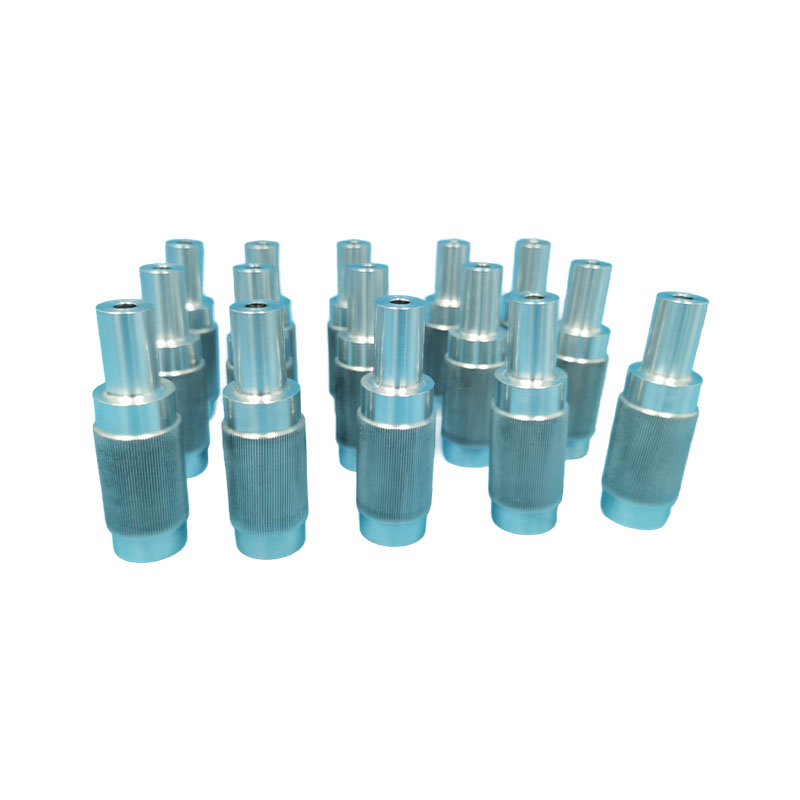
In modern precision manufacturing, stainless steel, due to its excellent corrosion resistance, high strength, and good appearance, is widely used in industries such as medical devices, food machinery, aerospace, automotive parts, and high-end sanitary ware. However, stainless steel exhibits high toughness, low thermal conductivity, and a significant tendency for work hardening during processing, posing a severe challenge to traditional cutting processes. Against this backdrop, CNC turning, with its high automation, high repeatability, and flexible programming capabilities, has become the preferred method for machining stainless steel parts. "High efficiency, stability, and smooth finish" constitute the three core pursuits for the continuous optimization of the stainless steel CNC turning process.
1. High Efficiency: Seeking the Optimal Solution Between Cycle Time and Cost
Efficiency is the lifeline of manufacturing. The "high efficiency" of stainless steel CNC turning not only refers to high output per unit time but also emphasizes improving overall processing efficiency while ensuring quality. This relies on multifaceted synergistic optimization: First, selecting carbide or ceramic cutting tools suitable for the properties of stainless steel, coupled with sharp cutting edges and chip breaker designs, effectively reduces cutting forces and heat accumulation; second, using CAM software for intelligent path planning reduces idle travel and tool changes; third, employing a high-pressure internal cooling system to precisely deliver cutting fluid to the tool tip area significantly extends tool life and allows for higher feed rates. Some advanced companies have also introduced adaptive control technology, monitoring cutting load in real time and dynamically adjusting speed and feed to achieve a highly efficient cutting state of "full load but not overload," reducing single-piece machining time by more than 20%.
2. Stability: End-to-End Reliability from Equipment to Process
Stainless steel machining is highly susceptible to dimensional deviations and even scrap due to vibration, tool wear, or parameter fluctuations. Therefore, "stability" becomes a key indicator for measuring CNC turning capabilities. Stability stems first from a high-rigidity machine tool body—the bed is constructed from integral cast iron or mineral composite materials, and the spindle possesses high torque output and thermal deformation compensation capabilities. Secondly, the fixture system must ensure secure workpiece clamping and high repeatability, especially crucial for slender shaft parts. Furthermore, a standardized process database significantly reduces human error during adjustments. More importantly, modern CNC systems integrate online monitoring modules that can collect data such as spindle current and vibration frequency in real time. If data deviates from set thresholds, automatic alarms or shutdowns are triggered, truly achieving stable production with "controllable processes and predictable results."
3. Smoothness: Precision Control Behind Surface Quality
For medical implants, food contact parts, or decorative hardware, surface roughness often requires 0.4μm or even a mirror finish. Achieving a "smooth" surface in stainless steel CNC turning is not solely reliant on post-processing polishing; high-quality forming must be achieved during the turning stage. This necessitates the use of precision turning inserts, coupled with extremely small feed rates and high speeds. Simultaneously, preventing built-up edge formation is critical—by optimizing cutting speeds to avoid the tool sticking zone and ensuring adequate coolant coverage. Some high-end applications also employ micro-lubrication or dry turning combined with ultra-precision tools, meeting environmental requirements while achieving excellent surface integrity.
High efficiency, stability, and smoothness are not isolated goals, but rather a mutually supportive and dynamically balanced process triangle. Sacrificing stability for high-efficiency machining will lead to a surge in scrap rates; excessive pursuit of smoothness may slow down the production cycle; while neglecting efficiency in terms of both stability and smoothness will fail to meet the demands of commercial competition. Only through the deep integration of equipment upgrades, tool selection, parameter optimization, and intelligent control can these three core pursuits be truly realized in stainless steel CNC turning, providing a solid and reliable foundation for high-end manufacturing.
1. High Efficiency: Seeking the Optimal Solution Between Cycle Time and Cost
Efficiency is the lifeline of manufacturing. The "high efficiency" of stainless steel CNC turning not only refers to high output per unit time but also emphasizes improving overall processing efficiency while ensuring quality. This relies on multifaceted synergistic optimization: First, selecting carbide or ceramic cutting tools suitable for the properties of stainless steel, coupled with sharp cutting edges and chip breaker designs, effectively reduces cutting forces and heat accumulation; second, using CAM software for intelligent path planning reduces idle travel and tool changes; third, employing a high-pressure internal cooling system to precisely deliver cutting fluid to the tool tip area significantly extends tool life and allows for higher feed rates. Some advanced companies have also introduced adaptive control technology, monitoring cutting load in real time and dynamically adjusting speed and feed to achieve a highly efficient cutting state of "full load but not overload," reducing single-piece machining time by more than 20%.
2. Stability: End-to-End Reliability from Equipment to Process
Stainless steel machining is highly susceptible to dimensional deviations and even scrap due to vibration, tool wear, or parameter fluctuations. Therefore, "stability" becomes a key indicator for measuring CNC turning capabilities. Stability stems first from a high-rigidity machine tool body—the bed is constructed from integral cast iron or mineral composite materials, and the spindle possesses high torque output and thermal deformation compensation capabilities. Secondly, the fixture system must ensure secure workpiece clamping and high repeatability, especially crucial for slender shaft parts. Furthermore, a standardized process database significantly reduces human error during adjustments. More importantly, modern CNC systems integrate online monitoring modules that can collect data such as spindle current and vibration frequency in real time. If data deviates from set thresholds, automatic alarms or shutdowns are triggered, truly achieving stable production with "controllable processes and predictable results."
3. Smoothness: Precision Control Behind Surface Quality
For medical implants, food contact parts, or decorative hardware, surface roughness often requires 0.4μm or even a mirror finish. Achieving a "smooth" surface in stainless steel CNC turning is not solely reliant on post-processing polishing; high-quality forming must be achieved during the turning stage. This necessitates the use of precision turning inserts, coupled with extremely small feed rates and high speeds. Simultaneously, preventing built-up edge formation is critical—by optimizing cutting speeds to avoid the tool sticking zone and ensuring adequate coolant coverage. Some high-end applications also employ micro-lubrication or dry turning combined with ultra-precision tools, meeting environmental requirements while achieving excellent surface integrity.
High efficiency, stability, and smoothness are not isolated goals, but rather a mutually supportive and dynamically balanced process triangle. Sacrificing stability for high-efficiency machining will lead to a surge in scrap rates; excessive pursuit of smoothness may slow down the production cycle; while neglecting efficiency in terms of both stability and smoothness will fail to meet the demands of commercial competition. Only through the deep integration of equipment upgrades, tool selection, parameter optimization, and intelligent control can these three core pursuits be truly realized in stainless steel CNC turning, providing a solid and reliable foundation for high-end manufacturing.