


Stainless Steel CNC Turning: Injecting Powerful Momentum into Industrial Manufacturing
Release Time : 2026-02-12
In key fields such as high-end equipment manufacturing, medical devices, aerospace, and energy and chemical industries, stainless steel has become an indispensable core material due to its excellent corrosion resistance, high strength, and good hygienic properties. However, stainless steel's high hardness, high toughness, and tendency to work harden often present challenges in traditional machining methods, such as rapid tool wear, difficulty in controlling dimensional accuracy, and unstable surface quality. Stainless steel CNC turning technology, with its high precision, high efficiency, and high consistency, is becoming an indispensable "precision engine" in modern industrial manufacturing systems, injecting powerful momentum into industrial upgrading.
1. High-Precision Machining Capabilities Meet Stringent Industrial Needs
Modern CNC lathes are equipped with high-rigidity spindles, precision ball screws, and closed-loop feedback systems, achieving dimensional control accuracy of ±0.005mm or even higher. When machining critical stainless steel parts such as medical implants, hydraulic valve cores, and aerospace connectors, this micron-level machining capability ensures the interchangeability and functionality of the components. Meanwhile, optimized toolpaths are automatically generated by CAD/CAM software, effectively avoiding human error and enabling complex contours to be formed in a single clamping operation, significantly improving geometric accuracy and form and position tolerance stability.
2. Addressing Work Hardening: Intelligent Process Parameter Optimization
Stainless steel is highly susceptible to work hardening during cutting, leading to a sharp increase in subsequent cutting resistance and tool breakage. Advanced CNC turning systems dynamically adjust speed, feed, and depth of cut parameters by real-time monitoring of cutting forces and vibration signals, employing a strategy of "small depth of cut, fast feed, and high speed" to remove material before the hardened layer forms. Simultaneously, the use of carbide tools with cobalt or silicon nitride coatings, combined with a high-pressure internal cooling system, effectively reduces the temperature in the cutting zone, suppresses the hardening effect, and extends tool life by more than 30%.
3. High-Efficiency Automation Improves Productivity and Consistency
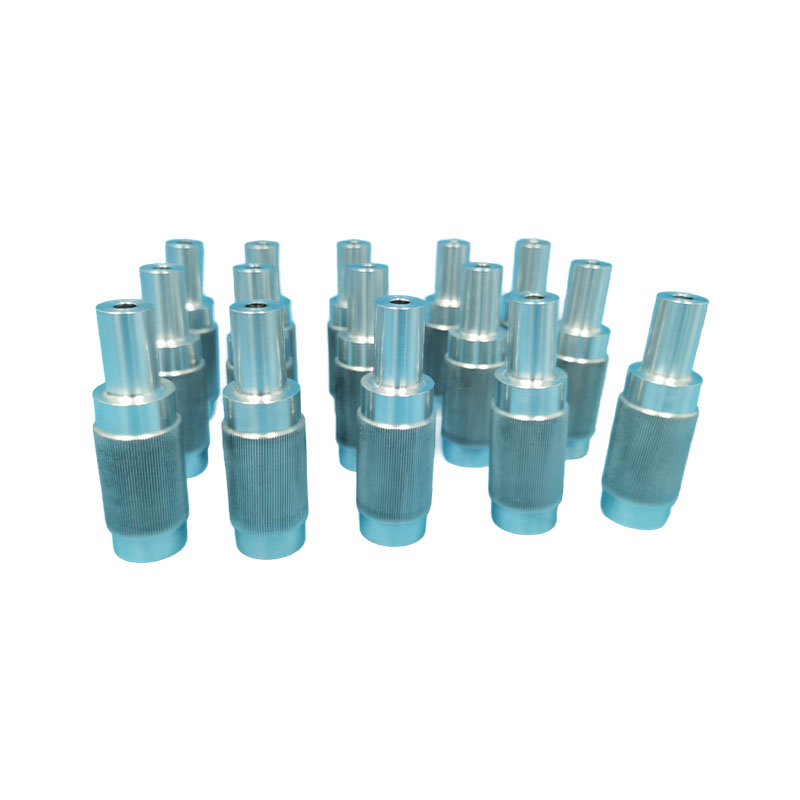
In mass production scenarios, stainless steel CNC turning can integrate automatic feeding, robotic loading and unloading, and online inspection units to achieve 24-hour continuous unmanned operation. For example, in the manufacturing of valve fittings or pump shafts, a single multi-channel CNC lathe can simultaneously complete multiple processes such as roughing, finishing, grooving, chamfering, and tapping, reducing cycle time by more than 50%. More importantly, programmed control ensures that every product strictly adheres to the same process standards, completely eliminating fluctuations caused by manual operation and guaranteeing large-scale, high-quality delivery.
4. Dual Standards for Surface Quality and Cleanliness
High-end applications have extremely high requirements for the surface roughness and cleanliness of stainless steel parts. By optimizing the tool tip radius, using finishing inserts, and refining finishing parameters, CNC turning can directly achieve a mirror finish with Ra below 0.4μm, reducing or even eliminating subsequent polishing processes. Simultaneously, the enclosed machining environment, combined with a centralized chip handling system, effectively prevents iron ion contamination, meeting the stringent "no cross-contamination" standards of industries such as food and pharmaceuticals.
5. Green Manufacturing and Efficient Resource Utilization
CNC turning significantly reduces the waste of stainless steel raw materials through precise material removal. Combined with dry cutting or micro-lubrication technologies, it greatly reduces the amount of cutting fluid used and waste fluid treatment costs. Some advanced factories have also introduced chip recycling and smelting systems to achieve closed-loop utilization of metal resources, aligning with the green manufacturing concept under the "dual carbon" target.
Stainless steel CNC turning is far more than just a processing method; it's a comprehensive technology platform integrating materials science, intelligent control, and lean manufacturing. With its core advantages of "precision, stability, speed, and cleanliness," it supports the manufacturing of thousands of critical components, from cardiac stents to nuclear power valves, continuously injecting reliable, efficient, and sustainable power into the modern industrial system. In the future wave of intelligent manufacturing, this "foundation of precision engineering" will undoubtedly play an even more irreplaceable role.
1. High-Precision Machining Capabilities Meet Stringent Industrial Needs
Modern CNC lathes are equipped with high-rigidity spindles, precision ball screws, and closed-loop feedback systems, achieving dimensional control accuracy of ±0.005mm or even higher. When machining critical stainless steel parts such as medical implants, hydraulic valve cores, and aerospace connectors, this micron-level machining capability ensures the interchangeability and functionality of the components. Meanwhile, optimized toolpaths are automatically generated by CAD/CAM software, effectively avoiding human error and enabling complex contours to be formed in a single clamping operation, significantly improving geometric accuracy and form and position tolerance stability.
2. Addressing Work Hardening: Intelligent Process Parameter Optimization
Stainless steel is highly susceptible to work hardening during cutting, leading to a sharp increase in subsequent cutting resistance and tool breakage. Advanced CNC turning systems dynamically adjust speed, feed, and depth of cut parameters by real-time monitoring of cutting forces and vibration signals, employing a strategy of "small depth of cut, fast feed, and high speed" to remove material before the hardened layer forms. Simultaneously, the use of carbide tools with cobalt or silicon nitride coatings, combined with a high-pressure internal cooling system, effectively reduces the temperature in the cutting zone, suppresses the hardening effect, and extends tool life by more than 30%.
3. High-Efficiency Automation Improves Productivity and Consistency
In mass production scenarios, stainless steel CNC turning can integrate automatic feeding, robotic loading and unloading, and online inspection units to achieve 24-hour continuous unmanned operation. For example, in the manufacturing of valve fittings or pump shafts, a single multi-channel CNC lathe can simultaneously complete multiple processes such as roughing, finishing, grooving, chamfering, and tapping, reducing cycle time by more than 50%. More importantly, programmed control ensures that every product strictly adheres to the same process standards, completely eliminating fluctuations caused by manual operation and guaranteeing large-scale, high-quality delivery.
4. Dual Standards for Surface Quality and Cleanliness
High-end applications have extremely high requirements for the surface roughness and cleanliness of stainless steel parts. By optimizing the tool tip radius, using finishing inserts, and refining finishing parameters, CNC turning can directly achieve a mirror finish with Ra below 0.4μm, reducing or even eliminating subsequent polishing processes. Simultaneously, the enclosed machining environment, combined with a centralized chip handling system, effectively prevents iron ion contamination, meeting the stringent "no cross-contamination" standards of industries such as food and pharmaceuticals.
5. Green Manufacturing and Efficient Resource Utilization
CNC turning significantly reduces the waste of stainless steel raw materials through precise material removal. Combined with dry cutting or micro-lubrication technologies, it greatly reduces the amount of cutting fluid used and waste fluid treatment costs. Some advanced factories have also introduced chip recycling and smelting systems to achieve closed-loop utilization of metal resources, aligning with the green manufacturing concept under the "dual carbon" target.
Stainless steel CNC turning is far more than just a processing method; it's a comprehensive technology platform integrating materials science, intelligent control, and lean manufacturing. With its core advantages of "precision, stability, speed, and cleanliness," it supports the manufacturing of thousands of critical components, from cardiac stents to nuclear power valves, continuously injecting reliable, efficient, and sustainable power into the modern industrial system. In the future wave of intelligent manufacturing, this "foundation of precision engineering" will undoubtedly play an even more irreplaceable role.